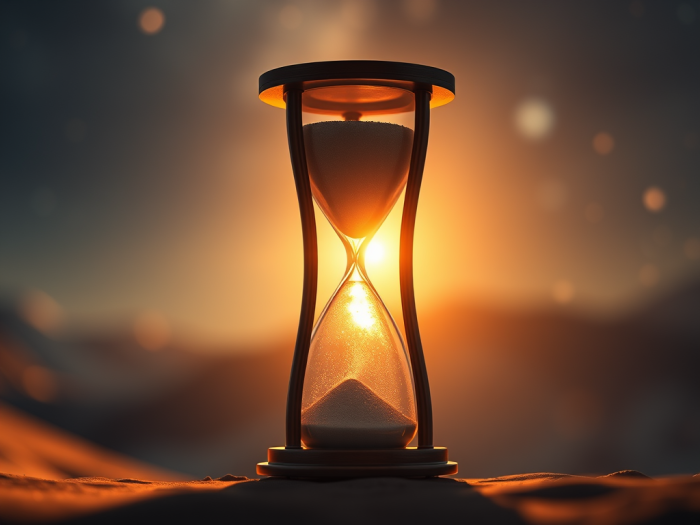
⏳ Let’s Get Fit TIME Series – Part 1 — The Most Valuable Currency We All Share – Understanding time is one of the most powerful steps toward living with purpose. Time shapes our experiences, choices, and relationships — yet so many of us move through life without noticing its rhythm. In this post, we explore how different cultures, philosophies, and spiritual traditions define time, and how understanding time can help us slow down, find balance, and appreciate every moment we’re given.
🌍 Introduction: The Eternal Dance of Time
Time — an invisible yet omnipresent force — rules every heartbeat, every sunrise, and every goodbye. Whether we see it as a friend, an enemy, or a guide, time defines our existence. It molds our memories, directs our decisions, and reminds us that nothing lasts forever.
But what is time? Is it real, or merely a human-made concept? Philosophers, spiritual thinkers, and entire cultures have debated this question for centuries. Let’s take a deep dive into how time is defined across different lenses — and what it truly means to live in time rather than against it.
🧠 Philosophical Perspectives on Time
Philosophically, time has always been one of the greatest mysteries of human thought. Thinkers from Aristotle to Einstein have offered perspectives that still shape how we understand the ticking of the cosmic clock.
- Aristotle described time as a “measure of change” — it exists only when things move or transform. If nothing ever changed, time would be meaningless.
- Augustine of Hippo famously said, “What is time? If no one asks me, I know; if I wish to explain it, I do not know.” He believed time was deeply tied to the human soul — something we experience but cannot hold.
- Immanuel Kant proposed that time isn’t an external reality but a way our minds organize experiences. In other words, time exists because we perceive it that way.
- Einstein later revolutionized our view by merging time and space into a single fabric — spacetime — where time stretches, slows, or speeds depending on gravity and movement.
🕰️ Philosophical Reflection:
If time bends, slows, and speeds depending on where we are and how we move, perhaps what we truly measure isn’t time itself — but our relationship to it.
🌿 Spiritual Perspectives on Time
Spiritually, time is often seen as both an illusion and a teacher. Many traditions suggest that the present moment is the only reality that exists.
- Buddhism teaches that clinging to the past or worrying about the future causes suffering. True peace exists only in the now.
- Hinduism views time as cyclical, represented by the eternal wheel of creation, preservation, and destruction — birth, life, and death.
- Christianity often treats time as linear, a divine journey from creation to eternity. Every moment holds purpose in the divine plan.
- Indigenous cultures around the world see time not as a clock but as a circle — an ongoing rhythm tied to nature’s cycles of planting, growing, and rebirth.
✨ Spiritual Reflection:
If every moment is sacred, then “being on time” means being present, not punctual.
🌎 Cultural Perspectives on Time
Across cultures, the meaning and management of time differ dramatically. How people value and use time often reflects their worldview.
- In Western cultures, time is linear, scheduled, and goal-oriented. “Time is money” dominates the mindset — efficiency equals success.
- In Latin American, African, and many Asian cultures, time is relational. People value being present with others over sticking to the clock.
- Japanese culture balances efficiency and mindfulness — a respect for timing (ma), allowing space between actions for harmony.
- Indigenous cultures see time as seasonal — guided by the Earth, not the clock. The sun, moon, and tides determine what’s “on time.”
⏰ Cultural Reflection:
Different societies don’t just live in different time zones — they live in different time philosophies.
🕊️ Time as a Concept
Many scientists and philosophers agree that time is not a tangible “thing” but a concept — a construct humans use to make sense of change and sequence.
We mark it with calendars and clocks, but those are merely symbols. What we truly experience are moments — emotional and sensory imprints of existence.
Time, then, is our way of measuring the immeasurable. Without it, there would be no memory, no growth, no aging, and no story to tell.
💡 How People Value Time
The way we value time reveals what we value in life.
Some people see time as a precious gift to spend wisely; others waste it, assuming there’s plenty left. Yet, how we treat time reflects our priorities and awareness of mortality.
- A person chasing wealth may trade time for money.
- A parent values moments with children more than material gains.
- A monk treasures silence, knowing time spent in stillness deepens awareness.
- A busy professional might measure time in deadlines and meetings.
⏳ Truth: Those who truly value time know that it cannot be saved, only spent.
💬 Do Some People Value Time More Than Others? Why?
Yes — and it often depends on life stage, culture, and experience.
- Youth often feel time is infinite; days stretch endlessly, and “later” always exists.
- Adults start to sense its speed; priorities shift toward legacy and family.
- Elders cherish each day as sacred, knowing time is no longer abundant.
People who have faced loss, illness, or trauma tend to value time deeply. They have seen how quickly everything can change — and learn to live with urgency and gratitude.
❤️ Is Time Important?
Absolutely. Time gives meaning to all other aspects of life — love, growth, and transformation. Without time, we couldn’t evolve, learn, or heal.
It is through time that we understand impermanence, which teaches us to appreciate the present moment more profoundly.
Time is both the stage and the storyteller — where life’s lessons unfold.
📖 Short Reflective Story for Young Readers: “The Hourglass in the Backpack”
One morning, Mia found a small hourglass in her grandmother’s attic.
“Every grain of sand is a moment,” Grandma said. “Don’t waste them waiting for perfect days.”
Mia didn’t understand. She spent her school days rushing — wishing it was recess, then home time, then the weekend.
But one day, the hourglass cracked. Sand began slipping away faster than ever. Panic struck her heart.
She ran to her grandmother, crying, “I lost all my time!”
Her grandmother smiled gently. “No, dear. You just learned that time isn’t lost — it’s lived.”
From that day forward, Mia watched each sunset, listened more closely to her friends, and noticed the beauty in waiting.
🕊️ Lesson: You don’t need more time — you just need to notice the time you already have.
🕰️ Short Reflective Story for Older Readers: “The Man Who Measured Moments”
Daniel was a man of schedules — meetings, goals, achievements.
He tracked his hours like currency. Retirement, he thought, would finally give him time.
Years passed. His hair turned silver, his planner empty. One morning, he sat by the window, staring at the sunrise — something he hadn’t watched in decades. His granddaughter entered, laughing, “Grandpa, are you doing nothing?”
He smiled, eyes misty. “No, sweetheart. I’m doing everything.”
For the first time, he realized time wasn’t about doing — it was about being.
🌅 Lesson: The richest people are not those with money, but those with time to feel alive.
💬 Reflection Questions
- How do you personally define time?
- When do you feel time moves fastest — and slowest?
- Which moments in life feel “timeless” to you?
- If today were your last day, how would you spend your remaining hours?
- How can you bring more presence into your daily routine?
💡 Advice Section: How to Value Time Positively
🌸 1. Live intentionally.
Don’t just let time pass — fill it with purpose. Ask yourself daily: Is this how I want to spend my life?
🕯️ 2. Protect your time.
Say no to distractions that drain your peace. Your time is sacred energy.
🌞 3. Create meaningful moments.
It’s not about how long you live — it’s about how deeply you live.
🧘 4. Slow down.
In a world obsessed with speed, slowness is a rebellion. Pause to breathe and feel.
❤️ 5. Cherish people, not possessions.
Memories outlast materials. Invest your time in love, kindness, and connection.
🌟 Positive Section: When Time Works for Us
Example 1: A teacher who takes time to encourage a struggling student plants seeds that may bloom decades later.
Example 2: A runner who trains daily learns patience — proving that consistency over time builds both body and spirit.
Example 3: A family who eats dinner together each night learns that shared time is love in its simplest form.
Quote:
“Time you enjoy wasting is not wasted time.” — Bertrand Russell
⚡ Negative Section: When Time Controls Us
Example 1: Constantly rushing, multitasking, and chasing deadlines — we mistake busyness for purpose.
Example 2: Living in regret of the past or fear of the future keeps us from experiencing the only reality we have — the present.
Example 3: Comparing our life timeline to others can create frustration and anxiety instead of gratitude.
Quote:
“The trouble is, you think you have time.” — Jack Kornfield
💭 Positive Reflections
Time is the silent partner in every success, healing, and dream.
The way we treat time reflects how much we value our own life. When we slow down to appreciate each second, the ordinary becomes sacred.
So next time you glance at the clock, remember: it’s not counting down your life — it’s inviting you to live it.
🌅 Final Thoughts
Time is a mystery, a gift, and a teacher all in one.
Philosophers analyze it. Scientists measure it. Spiritual leaders honor it. But only you can decide how to spend it.
Use time to grow, to heal, to connect — and most of all, to be present.
Because the truth is simple: you don’t find time, you make it.
🧭 Sources
- Aristotle, Physics, Book IV
- Augustine of Hippo, Confessions
- Immanuel Kant, Critique of Pure Reason
- Albert Einstein, Relativity: The Special and the General Theory
- The Dhammapada (Buddhist Text)
- The Bhagavad Gita
- Various cultural anthropological studies on time perception (Geert Hofstede’s Cultural Dimensions, Edward Hall’s “The Silent Language”)
Leave a Reply