🌟 Introduction
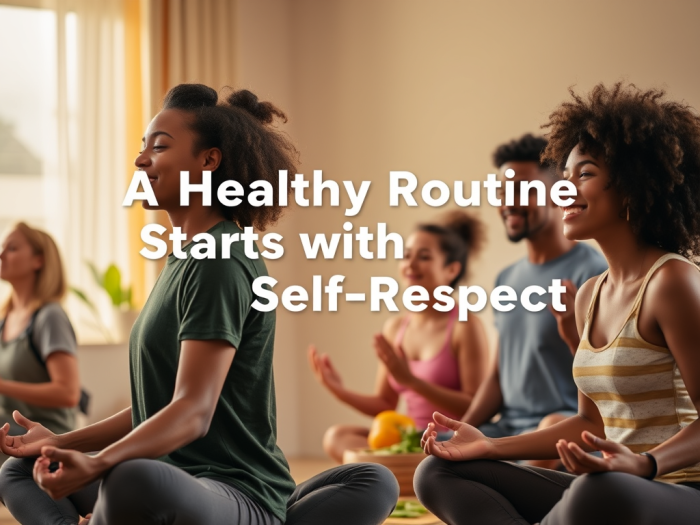
Health is not just about diet and exercise—it’s about how you value yourself. The phrase “A healthy routine starts with self-respect” reminds us that real wellness begins when we believe we are worthy of care, effort, and consistency.
Self-respect means honoring your body and mind through your daily choices—how you eat, rest, move, think, and speak to yourself. When people act from self-respect, they naturally develop habits that support long-term health instead of chasing short-term fixes.
For both young and older people, self-respect is the foundation that fuels discipline, balance, and positive energy—making healthy living not a punishment, but an act of love.
🧠 1. Understanding the Link Between Self-Respect and Health
Self-respect is the belief that your well-being and happiness are valuable. It’s the quiet confidence that says:
“I deserve to live in a body and mind that feel good.”
When self-respect is strong:
- You make choices aligned with your values.
- You set boundaries against harmful habits or people.
- You prioritize rest and nutrition, not guilt or pressure.
According to psychologist Nathaniel Branden (1994), self-respect is a crucial component of self-esteem, which influences motivation, behavior, and life satisfaction. People with high self-respect tend to pursue healthier routines because they see themselves as worth the effort.
🌿 2. The Psychology Behind Healthy Routines
Behavioral psychology shows that habits are more likely to last when they are built on self-worth rather than shame or pressure.
- Intrinsic motivation (doing something because it feels meaningful) leads to more sustainable routines than external motivation (doing it for approval or fear).
- Self-respect strengthens intrinsic motivation because it aligns with identity: “I care for my health because I respect myself.”
- When you view health as self-care, not self-control, you’re more consistent, less stressed, and more joyful in the process (Neff, 2011).
👩🎓 3. Story: A Young Person’s Journey — Olivia and the Self-Respect Shift
Olivia, a 22-year-old college student, constantly compared herself to fitness influencers online. She exercised out of guilt, skipped meals, and felt trapped in cycles of burnout.
After joining a wellness group, she learned to redefine her goals: instead of chasing perfection, she began moving her body to feel strong and confident. She replaced negative self-talk with affirmations like, “I work out because I respect my body, not because I hate it.”
Within months, Olivia’s mindset—and health—transformed. She found balance, energy, and peace.
Lesson: When you root your routine in self-respect, health becomes empowerment, not punishment.
👨🦳 4. Story: An Older Adult’s Example — Mr. Daniels and the Power of Routine
At 67, Mr. Daniels realized his health had declined after years of stress and neglect. His doctor urged him to adopt better habits, but he dismissed it, thinking, “I’m too old to change.”
After his granddaughter gave him a journal titled “I Am Worth the Effort,” he began reflecting on how he had always cared for others but rarely himself. Slowly, he started walking every morning, cooking balanced meals, and keeping regular sleep hours.
Six months later, not only had his energy returned, but his confidence grew. He said, “Taking care of myself became a way of showing respect for the life I’ve been given.”
Lesson: It’s never too late to start a healthy routine when it’s rooted in self-respect.
🌱 5. How Self-Respect Shapes a Healthy Lifestyle
| Aspect of Self-Respect | Healthy Habit It Promotes | Resulting Benefit |
|---|---|---|
| Setting boundaries | Saying no to overwork or junk food | Reduced stress and better rest |
| Honoring your body | Eating nourishing foods, exercising regularly | Improved strength and energy |
| Prioritizing rest | Creating bedtime routines | Enhanced mood and focus |
| Positive self-talk | Encouraging yourself instead of criticism | Greater motivation and resilience |
| Self-care consistency | Scheduling time for wellness | Long-term health stability |
Self-respect turns “I have to” into “I choose to.”
🧘 6. Self-Respect for All Ages
For Young People:
- Peer pressure and comparison can harm self-esteem. Practicing self-respect means making choices that honor your body—not others’ opinions.
- A healthy routine built on self-respect includes eating well, sleeping enough, and setting limits on screen time.
- Remember: saying “no” to harmful trends or burnout is a form of self-respect.
For Older Adults:
- Aging gracefully means respecting your body’s current needs, not regretting the past.
- Gentle exercise, nutritious meals, and mental engagement (reading, socializing, hobbies) demonstrate ongoing self-care.
- Self-respect also means asking for help when needed—acknowledging your worth through self-advocacy.
At every stage of life, health begins where self-worth grows.
💡 7. Simple Ways to Build a Self-Respectful Routine
| Practice | Why It Matters | Example |
|---|---|---|
| Morning Affirmations | Sets a positive tone and reinforces worthiness | “I respect myself by taking care of me today.” |
| Scheduled Breaks | Prevents exhaustion and honors rest | Short mindful pauses throughout the day |
| Mindful Eating | Nourishes body with awareness and gratitude | Slowing down and savoring food |
| Daily Movement | Shows appreciation for physical ability | 20–30 minutes of walking, yoga, or stretching |
| Gratitude Practice | Reinforces value in self and life | Journaling 3 things you’re grateful for |
| Positive Self-Talk | Replaces criticism with compassion | “I’m proud of my effort today.” |
Small respectful actions lead to lasting results.
💬 8. Reflection Questions
- What daily choices reflect respect for your mind and body?
- How do you talk to yourself when you make mistakes or skip a day?
- What healthy habit could you start as an act of self-respect this week?
- How does respecting yourself influence the way others treat you?
🌈 9. Advice: Build Health from the Inside Out
- Start with your mindset: The foundation of health is believing you deserve it.
- Replace guilt with gratitude: Focus on what your body can do, not what it can’t.
- Be consistent, not perfect: Self-respect means honoring progress over perfection.
- Set boundaries: Protect your energy, time, and peace.
- Celebrate your effort: Every healthy choice is an affirmation of your worth.
When you respect yourself, you naturally build a lifestyle that reflects that respect.
💖 Conclusion
“A healthy routine starts with self-respect” because lasting wellness is not built on pressure or perfection—it’s built on love, dignity, and care.
For young people, self-respect means choosing habits that support growth instead of comparison. For older adults, it means nurturing the body and mind with patience and gratitude.
When you respect yourself, your daily actions begin to align with your values.
You rest, eat, move, and think differently—because you know you’re worth it.
A healthy life doesn’t start in the gym or the kitchen—it starts in the heart. 💚
📚 Sources
- Branden, N. (1994). The Six Pillars of Self-Esteem. Bantam.
- Deci, E. L., & Ryan, R. M. (2000). The “what” and “why” of goal pursuits: Human needs and the self-determination of behavior. Psychological Inquiry, 11(4), 227–268.
- Fredrickson, B. L. (2009). Positivity: Top-Notch Research Reveals the 3-to-1 Ratio That Will Change Your Life. Crown Publishing.
- Neff, K. D. (2011). Self-Compassion: The Proven Power of Being Kind to Yourself. HarperCollins.
- Sirois, F. M., & Hirsch, J. K. (2019). Self-compassion and adherence in chronic illness: The role of self-regulation and health-related quality of life. Journal of Behavioral Medicine, 42(4), 616–626.
Leave a Reply