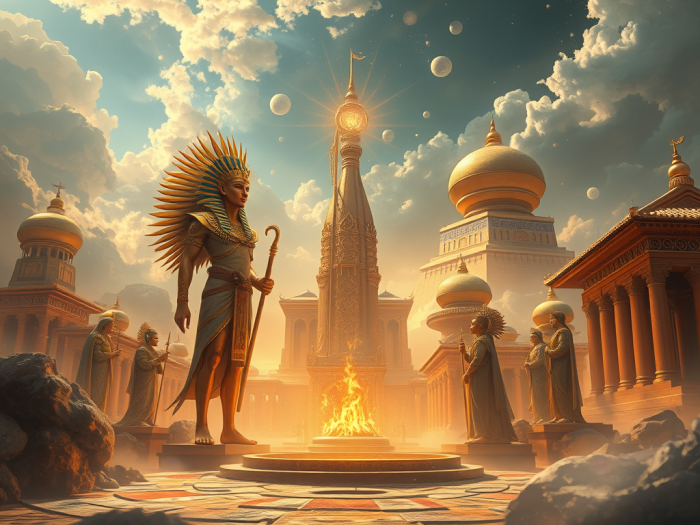
Let’s Get Fit Series – Part 1 – The Best Things in Life — A Journey Through Time, Culture, and Spirit – Discover what people throughout history and across cultures have considered the best things in life. Explore spiritual, cultural, and personal meanings, plus heartfelt stories for young and older generations that remind us what truly matters.
🌍 Introduction: What Are “The Best Things in Life”?
“The best things in life aren’t things.” This timeless saying captures a truth that generations have whispered through songs, scriptures, and stories. But what exactly are the best things in life?
Some say it’s love, others say freedom. For some, it’s health, peace, and family. For others, it’s purpose, beauty, and laughter. The answer has always been shaped by culture, time, and belief — yet, the heart of humanity seems to agree on one thing: the best things in life cannot be bought.
This article explores what people across history, societies, and faiths have considered the “best things in life,” and how these values continue to shape us. You’ll also find reflective stories for both young and older generations — stories that remind us why it’s often the simplest moments that bring the greatest joy. 🌸
🕰️ A Historical and Educational Journey: The Evolution of “The Best Things in Life”
1. Ancient Civilizations: Simplicity and Harmony
In ancient societies such as Egypt, Greece, China, and India, the “best things” were tied to balance, virtue, and divine order.
- Ancient Egypt: Egyptians viewed Ma’at — the principle of truth, balance, and justice — as one of life’s greatest treasures. To live in harmony with Ma’at meant living a good and fulfilled life, guided by moral order.
- Ancient Greece: Philosophers like Aristotle taught that eudaimonia — a state of flourishing and virtuous happiness — was the highest human goal. It wasn’t wealth, but wisdom, friendship, and moral excellence that made life beautiful.
- Ancient China: Confucius emphasized ren (benevolence) and li (ritual propriety). To live with respect, kindness, and order was seen as the best way to bring peace to oneself and the community.
- India: The pursuit of dharma (moral duty) and moksha (spiritual liberation) guided people to live meaningful lives. The “best things” were not possessions, but inner peace and truth.
2. Medieval Times: Faith and Purpose
During the Middle Ages, across Europe, the Middle East, and Asia, religion shaped ideas of what mattered most.
- In Christianity, the “best things” were love, faith, and grace — gifts from God that no coin could buy.
- In Islam, the best things were acts of charity (zakat), prayer, and community. Prophet Muhammad (peace be upon him) taught that “riches are not from an abundance of worldly goods but from a contented mind.”
- In Buddhism, detachment from desire and cultivation of compassion were seen as the ultimate treasures — because material wealth only tied one to suffering.
3. The Renaissance to Enlightenment: The Birth of Individual Meaning
As the world moved into the Renaissance, people began to celebrate art, creativity, and personal freedom as some of life’s finest joys. Leonardo da Vinci wrote that “simplicity is the ultimate sophistication,” suggesting that the best life is one rich in imagination and simplicity, not in luxury.
During the Enlightenment, thinkers like Rousseau and Voltaire proposed that reason, friendship, and moral freedom were the highest gifts humanity could possess.
4. Modern Era: Shifting Values
By the 20th and 21st centuries, technology, urbanization, and global communication transformed what people considered “the best things.”
Many began to equate success with comfort and status, yet there has been a growing counter-movement emphasizing well-being, nature, mindfulness, and connection.
From yoga to minimalism, gratitude journaling to social movements for justice — modern humanity is rediscovering that the “best things” are timeless: peace of mind, love, kindness, and purpose.
🌸 Cultural Perspectives: How Different Societies Define “The Best Things”
🌺 Eastern Cultures: Harmony and Balance
In Japan, the concept of Ikigai means “a reason for being.” It’s the joy that comes from doing what gives your life meaning — whether that’s art, caring for others, or living simply.
In India, the idea of Ananda represents pure bliss that arises from within — not from possessions, but from spiritual alignment.
In China, Wu Wei teaches effortless action — the peace that comes when one lives naturally, without forcing or resisting life’s flow.
🌄 Western Cultures: Freedom and Individual Happiness
Western societies, especially in recent centuries, have celebrated personal freedom and self-expression as core values. The “best things” often involve independence, creativity, and self-discovery. Yet, there’s also a growing realization that connection and compassion are equally vital.
Many Western philosophies — from Stoicism to modern psychology — now echo the same truth found in ancient wisdom: happiness is an inside job.
🌿 Indigenous and Tribal Cultures: Nature and Community
Among many Indigenous peoples around the world, the “best things” are tied to the land, family, and community harmony.
Life’s treasures are not stored in vaults, but in relationships — with ancestors, the Earth, and future generations.
🌟 Spiritual Perspectives: The Soul’s Definition of “The Best Things”
Across religions and spiritual traditions, the “best things” often point toward spiritual virtues: love, forgiveness, humility, and gratitude.
- Christianity: “The greatest of these is love.” (1 Corinthians 13:13)
- Islam: True wealth is not in possessions, but in the richness of the heart.
- Buddhism: Happiness comes not from gaining more, but from desiring less.
- Hinduism: The divine exists within every being; to live in awareness of that truth is the ultimate joy.
- Native Spirituality: The Earth, animals, and humans are one circle — peace comes from living in respect with all life.
Spiritual teachers throughout time — from Lao Tzu to Rumi to Mother Teresa — have reminded us that the best things in life are invisible but deeply felt: compassion, kindness, and inner peace.
💬 Stories That Teach: The Best Things in Life
🌼 Story 1: The Little Garden (For Younger Readers)
Once there was a boy named Leo who lived in a busy city. His parents worked long hours, and every day he watched people rush past their apartment window.
One morning, Leo noticed a small seed lying on the sidewalk. He picked it up and planted it in an old cup by his window. Every day he watered it, talked to it, and waited.
Weeks passed. The seed grew into a bright yellow flower. Every time Leo looked at it, he smiled — and soon, so did his parents. They began to spend more time together near the window, watching their little garden grow.
One day, Leo told his teacher, “I think the best thing in life is watching something grow — and helping it.”
Lesson: The best things often begin small — like seeds of love, care, and patience. 🌻
🍂 Story 2: The Old Watchmaker (For Older Readers)
In a small European town lived an old watchmaker named Eli. He was known not just for fixing watches, but for fixing hearts.
People came to his shop not just to repair timepieces, but to talk. He listened to everyone — the lonely widow, the worried student, the tired father. He always smiled and said, “Time is kind to those who are kind with their time.”
One winter, Eli passed away quietly in his sleep. The townspeople gathered, each holding one of the watches he had repaired. They realized that what Eli gave them was not just time — it was attention, kindness, and peace.
Lesson: The best things in life are not measured in hours, but in moments of care we share with others. 🕰️
🌻 Story 3: The Mountain and the Monk (For All Ages)
A monk once climbed a mountain in search of enlightenment. After years of meditation, he found peace. When asked what he discovered at the top, he replied:
“I found that the best things in life were not at the top, but along the way — the breeze that cooled me, the kindness of strangers who shared food, the laughter of children who asked why I was climbing.”
Lesson: The best things in life are not destinations — they are the moments that make the journey meaningful.
💖 Positive Section: What Makes Life Beautiful
- Love: The thread that connects all humanity.
- Health: Our foundation for experiencing everything else.
- Peace of Mind: The greatest wealth.
- Kindness: The universal language.
- Purpose: The reason we rise each day.
- Connection: The invisible bridge between hearts.
🌟 Examples:
- A grandparent’s hug.
- A sunrise walk.
- Laughter between friends.
- The relief after forgiving someone.
- Helping a stranger without expecting anything in return.
These are the “riches” that fill the human spirit.
⚖️ Negative Section: When We Forget What Truly Matters
Modern life often confuses success with fulfillment. We chase material comfort and social validation — but too much focus on these can cause emptiness.
Examples:
- Spending more time online than with loved ones.
- Working endlessly for possessions we barely use.
- Comparing our lives to others instead of appreciating our own.
- Seeking validation through likes instead of real conversations.
💭 Lesson: When we chase temporary satisfaction, we lose sight of lasting joy.
🌞 Advice Section: Living by “The Best Things” Every Day
- Practice gratitude daily. Write down three simple joys every morning.
- Invest in relationships. Time spent with people you love is never wasted.
- Give without expecting. Acts of service strengthen the soul.
- Simplify your space. Less clutter allows more clarity.
- Nourish your health. The body is your vessel for life’s blessings.
- Spend time in nature. It reminds us of beauty beyond screens and walls.
- Laugh often. Joy is a medicine the heart understands.
- Reflect and rest. Peace grows in stillness.
🌈 Reflection Questions
- What are the three things you value most in your life today?
- How have your ideas about “the best things” changed over the years?
- Which moments in your life felt truly rich — even without money?
- Who in your life represents “the best things” to you?
- What is one simple joy you can focus on more often?
💬 Inspirational Quotes
“The best things in life are free — the second best are very expensive.” — Coco Chanel
“It is not how much we have, but how much we enjoy, that makes happiness.” — Charles Spurgeon
“Gratitude turns what we have into enough.” — Anonymous
“Happiness is not something you postpone for the future; it is something you design for the present.” — Jim Rohn
“Peace comes not from having a perfect life, but from finding beauty in the imperfect.” — Unknown
🌺 Reflection Section: A Gentle Reminder
As you read this, take a deep breath.
Look around — the people, the light, the sounds. Life’s best treasures are already with you. They are not in stores or behind screens; they are in every heartbeat, every kind word, every shared smile.
The best things in life are not rare — they are simply overlooked. When you start noticing them, your world changes. 🌍💫
🌟 Series — The Best Things in Life
🌈 Introduction: Welcome to “The Best Things in Life” Series — A Journey of Meaning, Simplicity & Connection
💖 Part 1: The Best Things in Life — A Journey Through Time, Culture, and Spirit
💎 Part 2: What Money Can’t Buy — The Invisible Wealth That Enriches the Soul
🌞 Part 3: Simple Living, Rich Thinking — The Art of Finding Joy in Less
💞 Part 4: The Power of Connection — Relationships, Community, and Belonging
⏳ Part 5: The Gift of Time — How We Spend It Defines What We Value
🌈 The Grand Final: The Best Things in Life: A Complete Journey of Meaning and Balance
📚 Sources
- Aristotle, Nicomachean Ethics
- Confucius, The Analects
- Lao Tzu, Tao Te Ching
- Rumi, The Essential Rumi
- Dalai Lama, The Art of Happiness
- Viktor Frankl, Man’s Search for Meaning
- Alan Watts, The Wisdom of Insecurity
- World History Encyclopedia: Ancient Civilizations and Philosophy
Leave a Reply