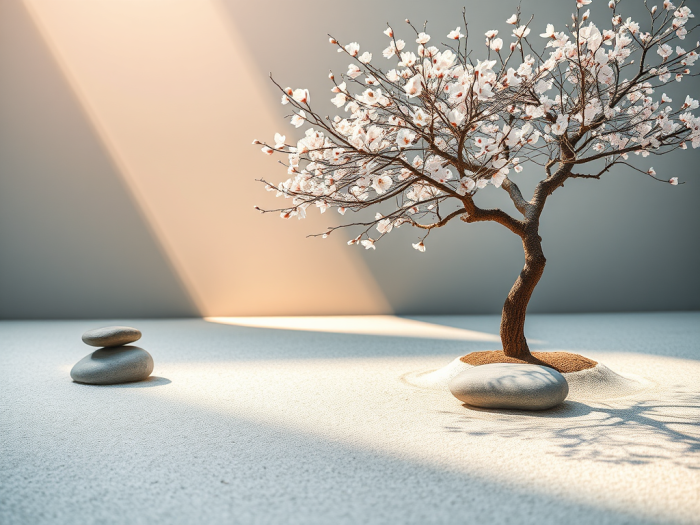
Let’s Get Fit Series – Part 3 – Simple Living, Rich Thinking — The Secret to Finding Joy in Less – Discover the art of simple living and the power of rich thinking. Learn from cultural wisdom, spiritual traditions, and heartfelt stories how minimalism and mindfulness can bring more joy, peace, and meaning to your life.
🌍 Introduction: Living with Less, Feeling More
Every generation reaches a moment when it asks: Do I own my possessions, or do they own me?
In our fast-paced, digital, and consumer-driven world, simplicity often feels like rebellion. We are told that success means more — more things, more likes, more recognition. Yet, deep down, our hearts whisper a quieter truth: less can be more.
Simple living does not mean living without joy, color, or ambition. It means choosing what truly matters — clearing the noise to hear life’s most meaningful songs. 🌿
As Mahatma Gandhi once said:
“Live simply so that others may simply live.”
This is not just a moral invitation; it’s a spiritual awakening — a way to reconnect with balance, gratitude, and peace.
🏺 Historical and Educational Overview: The Roots of Simplicity
1. Ancient Wisdom: Moderation and Balance
Simplicity has ancient roots across civilizations:
- Greece: The philosopher Epicurus taught that happiness comes from simple pleasures — friendship, freedom, and reflection.
- Rome: Seneca reminded people that wealth is not having much, but needing little.
- China: Lao Tzu and Taoist teachings praised the quiet power of simplicity and “flowing with the Way.”
- India: In Hinduism, the principle of Aparigraha (non-possessiveness) encouraged detachment from excess as a path toward spiritual freedom.
2. Medieval and Spiritual Movements
- Christian monks and Francis of Assisi practiced voluntary poverty, teaching that inner joy was richer than gold.
- Buddhist monks owned only a robe and a bowl — symbols of the freedom that comes from needing little.
- Indigenous tribes around the world lived in balance with nature, taking only what they needed and respecting every living being.
3. Modern Minimalism
The modern minimalist movement, influenced by Zen philosophy and environmental awareness, emerged in the 20th century. From simple architecture to digital detoxing, minimalism became both an aesthetic and a lifestyle.
Its message?
✨ Happiness grows when we stop measuring life by what we own and start measuring it by what we experience.
🌏 Cultural Perspectives on Simple Living
🌸 Japan: Zen and Wabi-Sabi
In Japan, wabi-sabi celebrates imperfection and impermanence — finding beauty in simplicity, in a chipped teacup or a fading leaf. Zen gardens and minimalist homes reflect the peace that comes from decluttering the soul and space.
🇮🇳 India: The Middle Path
Hinduism and Buddhism both teach balance — avoiding both indulgence and deprivation. The Middle Way is about harmony: enjoying life’s gifts without being consumed by them.
🌾 Africa: Community Over Possession
Many African societies emphasize Ubuntu — “I am because we are.” The wealth of community, friendship, and generosity outweighs the pursuit of individual accumulation.
🇲🇽 Latin America: Alegría and Family
Across Latin America, simple living is intertwined with joy (alegría), family, music, and food shared around the table. It’s not about minimalism for appearance’s sake, but for connection’s sake.
🌿 Western Simplicity Movements
In the West, transcendentalists like Henry David Thoreau wrote Walden to express how solitude, nature, and simplicity lead to spiritual richness. Today, movements like slow living and intentional living echo his call for mindfulness and authenticity.
🌺 Spiritual Understanding: The Inner Path of Simplicity
Every faith honors simplicity as sacred:
- Christianity: “Blessed are the poor in spirit, for theirs is the kingdom of heaven.” (Matthew 5:3)
- Islam: The Prophet Muhammad (peace be upon him) said, “Wealth is not in having many possessions, but in contentment of the soul.”
- Buddhism: Simplicity and mindfulness lead to enlightenment by ending suffering caused by desire.
- Hinduism: Simplicity aligns with sattva — purity, calmness, and truth.
- Native Spirituality: Balance with nature is not luxury — it’s necessity.
Spiritually, simplicity means freedom. It frees us from comparison, overthinking, and clutter — and brings us closer to truth.
💬 Stories That Teach Simplicity
🌸 Story 1: The Jar of Life (For Younger Readers)
A teacher stood before his class holding a large empty jar. He filled it with rocks and asked, “Is it full?”
“Yes!” the students said.
Then he added pebbles, shaking them into the spaces. “Is it full now?”
They nodded again.
Finally, he poured sand, filling every gap.
“Now,” he said, “this jar represents your life. The rocks are the important things — family, health, love, purpose. The pebbles are other things you enjoy. The sand is everything else. If you put the sand in first, you won’t have space for what truly matters.”
Lesson: Prioritize what gives life meaning; the rest will fit where it belongs. 🌼
🍂 Story 2: The Hermit’s Gift (For Older Readers)
A wealthy merchant once visited a hermit who lived simply on a mountain.
Surprised by the bare hut, the merchant asked, “Where are your possessions?”
The hermit smiled. “Where are yours?”
“I’m just passing through,” the merchant replied.
“So am I,” said the hermit.
Lesson: We are all passing through this life. The lighter our baggage, the freer our journey. 🕊️
🌿 Story 3: The Little House by the River (For All Ages)
An elderly couple lived in a tiny house by a river. They had no luxury, but each day they shared breakfast, fed birds, and watched the sun rise.
A visitor once said, “You have so little.”
The old woman smiled, “Perhaps. But we wake up grateful, eat with peace, and sleep with love. Tell me, what more could we need?”
Lesson: Joy isn’t measured in square feet — it’s measured in gratitude.
🌞 Positive Section: The Beauty of Living Simply
When we simplify, we don’t lose — we gain:
- 🌿 Clarity — Fewer distractions, more focus on what matters.
- 🕊️ Freedom — Less attachment, more peace.
- 💬 Connection — More time for people, not possessions.
- 💡 Creativity — A quiet mind welcomes inspiration.
- 💖 Gratitude — Simplicity reminds us of our blessings.
Examples:
- A walk at sunrise instead of a crowded mall.
- Cooking a simple meal with love.
- Giving away clothes you don’t wear.
- Turning off notifications for one evening.
- Spending time in nature without agenda.
⚠️ Negative Section: When We Confuse Excess with Happiness
- Overconsumption leads to stress, debt, and waste.
- Too much clutter in our homes mirrors clutter in our minds.
- Constant comparison steals joy and gratitude.
Examples:
- Buying to impress others instead of nurturing yourself.
- Overworking to afford luxuries while sacrificing rest.
- Defining success by possessions, not peace.
💭 Lesson: When we let go of what doesn’t serve us, space opens for what truly does.
🌈 Advice Section: How to Live Simply, Think Richly
- Declutter mindfully. Keep only what adds joy or function.
- Choose quality over quantity. One meaningful item is worth more than ten forgotten ones.
- Unplug regularly. Give your mind rest from digital noise.
- Practice gratitude daily. Count experiences, not possessions.
- Spend time in nature. Let simplicity of the earth calm your spirit.
- Cook at home. Food made with love nourishes both body and soul.
- Buy less, share more. Generosity multiplies joy.
- Focus on presence. Wherever you are, be fully there.
🌿 Reflection Questions
- What would your life look like if you lived more simply?
- What possessions could you release to feel lighter?
- How does simplicity affect your peace of mind?
- What daily habit adds noise instead of meaning?
- When was the last time “less” brought you “more”?
🌺 Inspirational Quotes
“Simplicity is the ultimate sophistication.” — Leonardo da Vinci
“The more you have, the more you are occupied; the less you have, the more you are free.” — Mother Teresa
“Nature does not hurry, yet everything is accomplished.” — Lao Tzu
“Happiness is not having what you want, but wanting what you have.” — Unknown
“Minimalism is not about having less. It’s about making room for more of what matters.” — Anonymous
💖 Reflection Section: The Gift of Simplicity
Pause for a moment.
Feel your breath — it costs nothing, yet it sustains your life.
Listen to the quiet — it speaks volumes when you allow it.
Simplicity is not emptiness; it’s fullness in disguise. It’s the freedom to say enough, and the wisdom to see beauty in less.
In a world that tells us to add, simplicity invites us to subtract — to clear the way for joy, peace, and gratitude. 🌿
🌟 Series — The Best Things in Life
🌈 Introduction: Welcome to “The Best Things in Life” Series — A Journey of Meaning, Simplicity & Connection
💖 Part 1: The Best Things in Life — A Journey Through Time, Culture, and Spirit
💎 Part 2: What Money Can’t Buy — The Invisible Wealth That Enriches the Soul
🌞 Part 3: Simple Living, Rich Thinking — The Art of Finding Joy in Less
💞 Part 4: The Power of Connection — Relationships, Community, and Belonging
⏳ Part 5: The Gift of Time — How We Spend It Defines What We Value
🌈 The Grand Final: The Best Things in Life: A Complete Journey of Meaning and Balance
📚 Sources
- Lao Tzu, Tao Te Ching
- Seneca, Letters from a Stoic
- Epicurus, The Art of Happiness
- Henry David Thoreau, Walden
- Dalai Lama, The Art of Happiness
- Mahatma Gandhi, Collected Works
- Shunmyo Masuno, Zen: The Art of Simple Living
Leave a Reply