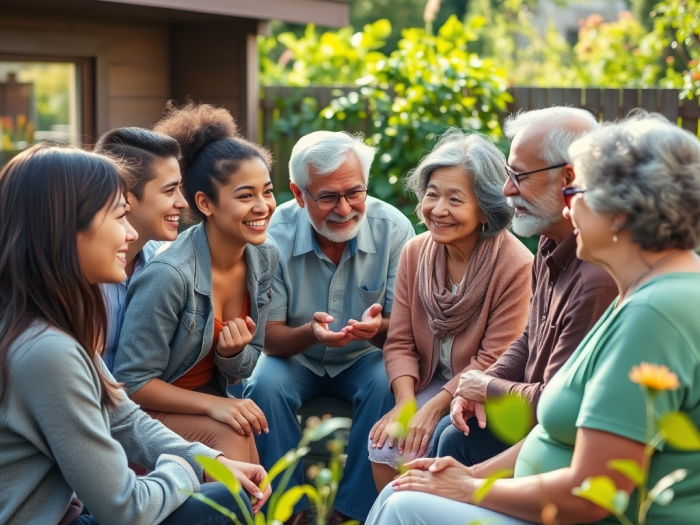
“The most important thing in communication is hearing what isn’t said.” – Peter Drucker
🌱 Why Communication Matters for Everyone
Communication is the foundation of every relationship—family, friendship, work, and community. It’s how we connect, understand, and build trust with one another.
But healthy communication isn’t just about talking—it’s about listening, empathy, and respect. When we communicate well, we feel seen, understood, and valued.
In today’s world, where young people rely heavily on texting and older generations prefer face-to-face conversations, bridging communication gaps has never been more important.
💬 What Is Healthy Communication?
Healthy communication means expressing yourself clearly and respectfully while also listening to others. It involves using both words and body language to show understanding.
Sometimes, the smallest gestures—eye contact, a nod, a gentle tone—can make the biggest difference. When both people feel heard, connection grows naturally.
🧡 Real-Life Example: The Misunderstood Text
Lila, a teenager, once sent her grandmother a short message: “Can’t talk now.”
Her grandmother thought Lila was upset and felt hurt. Later, Lila explained that she was just in class.
That moment taught them both a valuable lesson—tone and context matter. They began scheduling weekly video calls to stay close.
Takeaway: In the digital age, misunderstandings are common. Choosing the right communication method—especially for emotional conversations—can make a world of difference.
👂 The Power of Listening
Listening is one of the most powerful forms of love. When you truly listen, you’re saying, “Your thoughts matter.”
Imagine this:
Marcus, a college student, tried to share his career dreams with his father, but every time he spoke, his father interrupted with advice. Marcus stopped sharing. Later, his dad realized he hadn’t been listening—he’d been reacting.
When he started to listen with patience, their relationship grew stronger.
Lesson: Listening isn’t just hearing—it’s understanding without judgment.
🤝 Bridging the Generational Gap
Communication styles change with age and experience.
- Teens may use emojis or quick messages.
- Adults may prefer phone calls or in-person talks.
- Seniors may value storytelling and personal contact.
The secret to bridging generations? Curiosity and empathy.
🌿 Example: The Garden Project
A group of teens volunteered with retirees to build a community garden. At first, they struggled to connect—the slang confused the older volunteers, and the teens found the older group too formal.
They began sharing stories about their childhoods while planting flowers, and soon, laughter filled the garden. They realized communication wasn’t about age—it was about connection.
Tip: Ask questions, share experiences, and be patient with different communication styles.
🌈 Handling Conflict with Kindness
Disagreements happen, but conflict doesn’t have to destroy relationships.
Instead of shouting or blaming, try this:
- Stay calm.
- Use “I” statements (“I feel…” instead of “You always…”).
- Listen before responding.
✨ Example: The Roommate Rule
Two roommates, Jenna and Sofia, argued about cleaning habits. Instead of ignoring each other, they created a cleaning schedule and learned to compromise.
Lesson: Respectful communication during conflict strengthens trust and cooperation.
💖 The Role of Empathy and Respect
Empathy means putting yourself in someone else’s shoes.
When you listen with compassion, you make others feel safe to express themselves.
At work, a manager noticed a young employee seemed distracted. Instead of criticizing, he asked, “Is everything okay?” She revealed she was caring for a sick parent. His empathy built trust—and the workplace became more supportive for everyone.
Remember: Empathy opens doors that authority never could.
🌟 Practical Tips to Build Healthy Communication
- Listen first. Don’t interrupt—let the other person finish.
- Be mindful of tone. How you say something is just as important as what you say.
- Ask questions. It shows interest and care.
- Stay calm during disagreements. Emotions can cloud understanding.
- Be honest and kind. Truth builds respect, but kindness keeps peace.
- Show gratitude. A simple “thank you for listening” can mean everything.
💭 Reflection Questions for Readers
- How do you usually respond when someone disagrees with you?
- What does “active listening” mean to you?
- When was the last time you misunderstood someone’s message?
- How can you improve your tone or body language when speaking?
🧠 Communication Vocabulary
| Word | Definition |
|---|---|
| Empathy | Understanding and sharing another person’s feelings. |
| Active Listening | Paying close attention and showing genuine interest. |
| Assertiveness | Expressing thoughts confidently while respecting others. |
| Nonverbal Cues | Gestures, tone, or facial expressions that communicate emotion. |
| Conflict Resolution | Solving disagreements peacefully and fairly. |
💡 Final Thoughts
Good communication builds bridges—between generations, families, and hearts.
It requires practice, patience, and an open mind.
Whether you’re a teen learning to express yourself or an adult trying to reconnect, remember: every word, gesture, and tone matters. The more we listen with empathy and speak with respect, the closer we become.
🪷 Sources
- Adler, R. B., Rosenfeld, L. B., & Proctor, R. F. (2018). Interplay: The process of interpersonal communication (14th ed.). Oxford University Press.
- Goleman, D. (2006). Social intelligence: The new science of human relationships. Bantam Books.
- Brown, B. (2012). Daring greatly. Penguin Random House.
- Hargie, O. (2017). The handbook of communication skills (4th ed.). Routledge.
Leave a Reply